
Over the years, I’ve worked on countless stone work projects across Ottawa — from patios and retaining walls to walkways, foundations, and stone veneers. And no matter the size or design, there’s one element that always determines how long the work will last: drainage.
It doesn’t matter how beautiful or skillfully built a masonry project looks — if the drainage isn’t right, it won’t survive Ottawa’s freeze-thaw cycles for long. I’ve seen amazing patios crack, retaining walls bulge, and stone steps shift, all because of one preventable issue: trapped water.
In this post, I’ll explain why proper drainage is essential for every stone project, how I design for it, and what happens when it’s ignored.
Understanding Ottawa’s Climate: The Freeze-Thaw Challenge
Ottawa’s climate can be brutal on masonry. During the fall and spring, we experience constant freezing and thawing. When water seeps into the ground or masonry joints, it expands as it freezes and contracts when it melts. Over time, that movement exerts pressure on the stone, mortar, and foundation.
Without proper drainage, this natural cycle leads to:
- Cracked stone or mortar joints
- Heaving and shifting patios
- Bulging or leaning retaining walls
- Water pooling and erosion around the foundation
I’ve repaired many stone structures that failed simply because water had nowhere to go. That’s why drainage isn’t an afterthought — it’s part of the design from day one.
How I Design Proper Drainage into Every Stone Work Project
Every project I take on — whether it’s a stone patio in Barrhaven or a retaining wall in Orleans — includes a drainage plan built right into the foundation. Here’s how I do it:
1. Grading and Slope
The first step is shaping the base to ensure water flows away from your home or structure. A slight slope — usually about 1 inch for every 4 to 6 feet — is enough to keep water moving.
For patios, I make sure surface water drains naturally, preventing puddling or pooling that can damage the joints or base. For walls and driveways, I design proper grading behind the stone to relieve hydrostatic pressure.
2. Base Preparation
A strong, well-draining base is the foundation of every successful stone project. I excavate to the correct depth and fill the area with layers of crushed stone, compacted in stages. This base allows water to pass through easily, preventing it from sitting under the structure.
I never use materials like clay or ungraded soil — they trap moisture, which can lead to frost heaving and cracks.
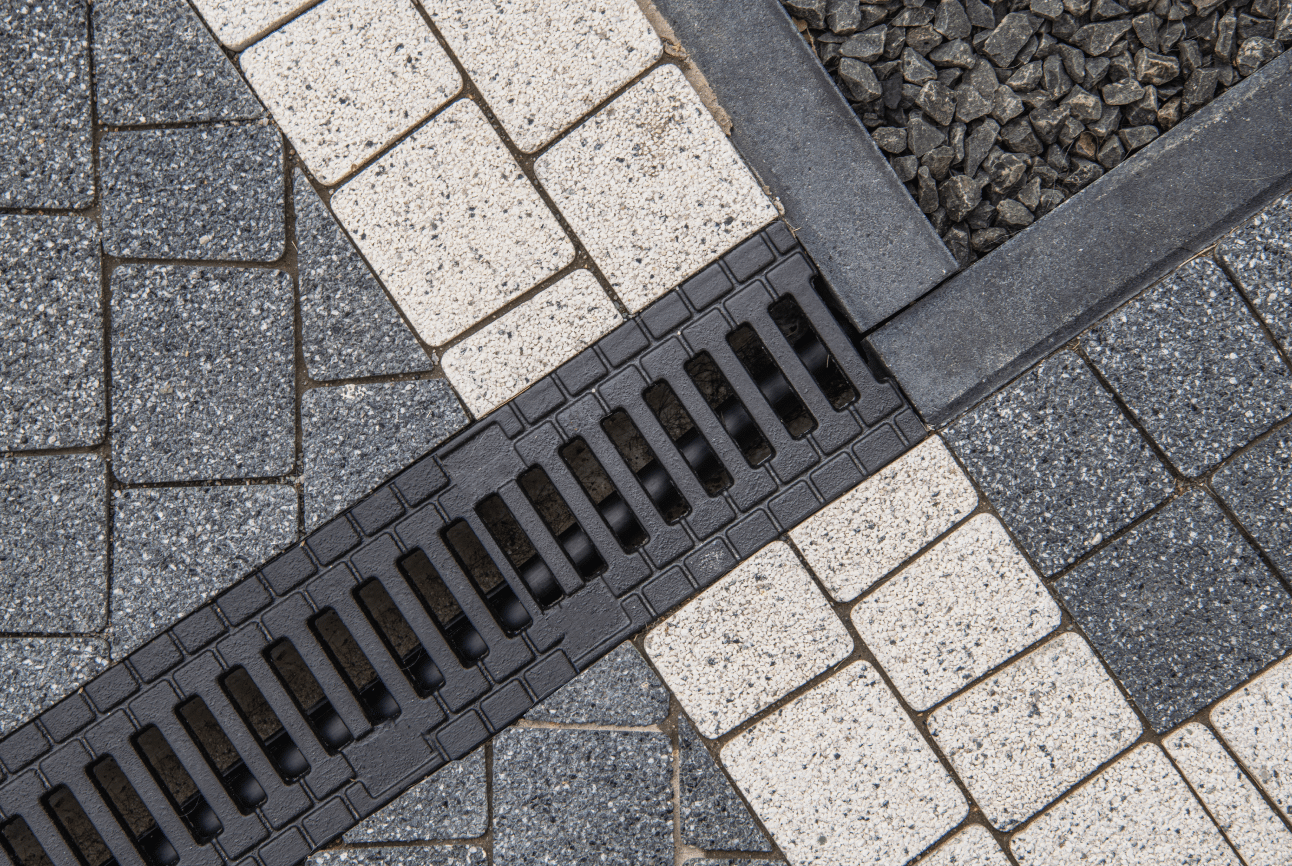
3. Drainage Systems
For larger stone features like retaining walls, I install drainage pipes (weeping tiles) behind the wall. These pipes collect and redirect water away from the structure, relieving pressure that could otherwise cause the wall to bulge or collapse.
I also use geotextile fabric to separate soil from the gravel backfill — keeping the drainage layer clear and functional for years.
4. Proper Jointing Materials
Water can seep through the smallest gaps, so I always choose the right joint material for the project. For outdoor stonework, I often use polymeric sand or mortar mixes designed to resist erosion and prevent water penetration.
When working with natural flagstone, I leave controlled drainage gaps that let rainwater pass through naturally, rather than trapping it on the surface.
5. Sealing and Finishing
After installation, I apply breathable sealants that protect against moisture without trapping it inside the stone. This helps repel water from the surface while allowing vapor to escape — the perfect balance for long-term durability in Ottawa’s climate.
What Happens When Drainage Is Ignored
Unfortunately, I’ve been called many times to repair projects that looked great initially but started failing after just a few winters. The reason is almost always the same — poor or no drainage planning.
Here’s what typically happens:
- Frost damage: Water trapped under the stone expands and lifts it during freezing temperatures.
- Wall failure: Hydrostatic pressure builds behind retaining walls, causing them to lean or bow outward.
- Surface erosion: Water washes out sand or mortar between stones, weakening the structure.
- Foundation problems: Improper slope directs water toward the home instead of away from it, leading to leaks or basement damage.
All of this can be avoided with a solid drainage strategy from the start. I tell my clients all the time — good drainage is invisible, but bad drainage shows up fast.
The Long-Term Benefits of Proper Drainage
When stonework is built with proper drainage, you get more than just a beautiful finish — you get lasting performance and peace of mind.
Here’s what you can expect:
- Reduced maintenance costs over time
- Increased lifespan of your patio, walkway, or wall
- Improved safety and stability
- Better protection for surrounding landscaping and structures
Proper drainage also helps keep your stonework looking new for longer by preventing staining, moss growth, and efflorescence caused by trapped moisture.
My Commitment to Lasting Stone Work in Ottawa
At Lesway Masonry, I believe that quality craftsmanship means thinking beyond the surface. I design every project — from patios to parging — with Ottawa’s climate and water patterns in mind.
When I finish a job, I want my clients to enjoy their stonework for decades without worrying about cracks, shifting, or water damage. That’s why I never take shortcuts when it comes to proper drainage. It’s the difference between stonework that looks great for a few years — and stonework that lasts a lifetime.
If you’re planning a stone patio, retaining wall, or exterior stone façade in the Ottawa area, I’d be happy to walk you through my process and make sure your project is designed to perform beautifully — in every season.