
Foundation parging plays an important role in protecting homes across Gloucester and Orleans. Many homeowners see parging as simply the smooth coating on the exterior of a foundation wall, but it actually serves several practical purposes. Parging helps protect concrete surfaces from moisture exposure, improves the appearance of the foundation, and adds a layer of protection against weather damage.
Over time, however, foundation parging begins to wear down. Homes in Gloucester and Orleans experience heavy snow, freezing temperatures, spring thaw cycles, and seasonal moisture changes. These environmental factors slowly weaken the parging surface and eventually lead to cracking, peeling, or separation from the foundation wall.
When this happens, repairing the parging becomes important not only for appearance but also for protecting the structure beneath it. Understanding how parging works, why it deteriorates, and how it should be repaired helps homeowners maintain the condition of their foundation and prevent larger masonry issues in the future.
This guide explains what homeowners should know about foundation parging repair and why proper restoration helps extend the life of masonry foundations.
What Foundation Parging Is and Why It Matters
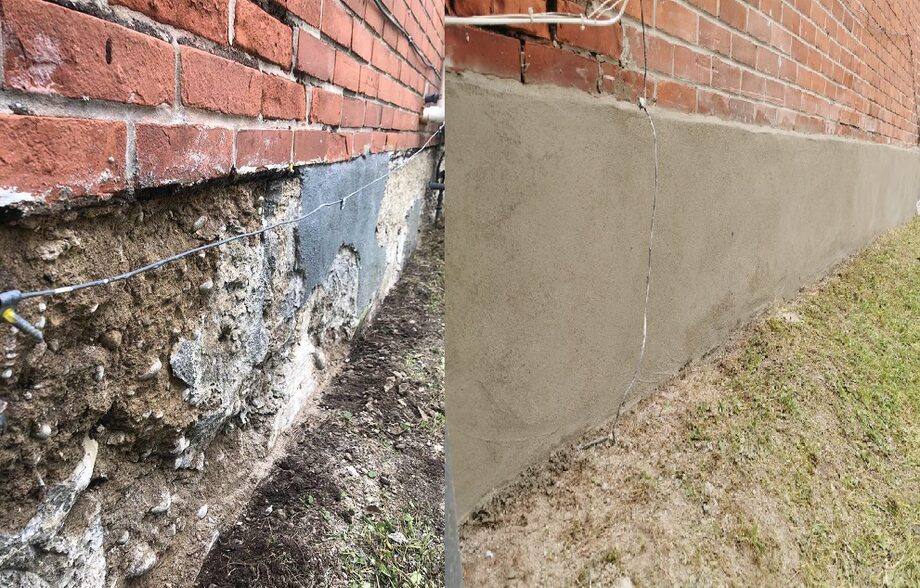
Parging is a thin layer of mortar applied to the exterior surface of a concrete or masonry foundation wall. The purpose of parging is both functional and aesthetic.
Functionally, parging acts as a protective barrier. It helps shield the foundation from moisture, snow accumulation, and surface weathering. By covering rough concrete surfaces, parging also reduces the number of small openings where water can penetrate.
Aesthetically, parging creates a smooth, finished look along the base of a home. Many homeowners in Gloucester and Orleans appreciate the clean appearance it provides, especially when the foundation is visible above ground.
While parging itself is not structural, it helps protect the structural components underneath. When the coating deteriorates, the exposed concrete becomes more vulnerable to moisture infiltration and surface damage.
Why Parging Fails on Foundations
Foundation parging is exposed to many environmental stresses, which gradually weaken the material over time. Several factors commonly cause parging to deteriorate.
Freeze and Thaw Cycles
In Ottawa’s climate, temperatures frequently move above and below freezing during winter months. Moisture that enters small cracks in the parging layer freezes and expands, putting pressure on the surface. Repeated cycles cause cracks to widen and sections of parging to separate from the wall.
Moisture Exposure
Rainwater, melting snow, and ground moisture often come into contact with foundation walls. If water continuously penetrates the parging surface, it accelerates deterioration and weakens the bond between the parging and the foundation.
Soil Movement
As soil surrounding a foundation expands and contracts, slight structural movement can occur. This movement may cause the parging surface to crack or detach from the concrete wall.
Age and Weathering
Even properly installed parging eventually wears down after years of exposure to wind, moisture, and sunlight.
Poor Installation
If the surface was not properly prepared during the original installation, the parging may not adhere well to the foundation and can begin to peel prematurely.
Signs That Foundation Parging Needs Repair
Homeowners in Gloucester and Orleans may notice several signs when foundation parging begins to fail.
Cracked Parging
Small cracks can appear across the surface of the parging. While these cracks may seem minor at first, they allow moisture to enter the material and cause further damage.
Flaking or Peeling Areas
Parging that begins to chip or fall away from the foundation exposes the rough concrete beneath it.
Hollow or Loose Sections
If the surface sounds hollow when tapped or feels loose, the parging may have separated from the foundation wall.
Discoloration or Moisture Staining
Dark stains or white mineral deposits on the foundation may indicate water infiltration.
Recognizing these signs early allows repairs to be completed before the damage spreads further across the foundation.
Why Timely Parging Repair Is Important
Although parging is not the structural component of a foundation, it plays an important role in protecting the surface from environmental exposure.
When parging deteriorates, the concrete foundation beneath it becomes more vulnerable to weather damage. Moisture penetration can eventually lead to surface erosion, cracks, and other forms of masonry deterioration.
Repairing damaged parging early helps prevent deeper foundation problems and maintains the exterior appearance of the home.
How Foundation Parging Repair Is Completed
Repairing parging requires careful preparation and proper masonry techniques to ensure the new coating bonds correctly with the foundation wall.
Inspection of the Foundation Surface
The repair process begins with a detailed inspection of the foundation. This step helps determine whether the damage is limited to the parging layer or if deeper issues exist in the concrete wall.
Moisture patterns, cracks, and structural movement are evaluated to ensure the repair addresses the underlying cause of deterioration.
Removing Damaged Parging
Loose or deteriorated parging must be removed before new material can be applied. This step ensures that the new coating will bond securely to the foundation surface.
The damaged material is carefully chipped away until a solid base is exposed.
Surface Preparation
The foundation surface is then cleaned to remove dust, debris, and loose particles. Proper surface preparation is critical because it allows the new parging mixture to adhere properly.
In some cases, bonding agents are applied to strengthen the connection between the foundation wall and the new coating.
Applying Fresh Parging
Once the surface is ready, a new layer of parging mortar is applied. The mortar is spread evenly across the foundation wall and shaped to create a smooth and uniform finish.
This new coating restores the protective layer that shields the foundation from environmental exposure.
Finishing and Curing
After the parging is applied, the surface is finished carefully to ensure proper texture and appearance. The mortar must then cure gradually to achieve maximum strength.
Proper curing allows the new parging layer to bond securely with the foundation and resist future cracking.
Why Professional Masonry Techniques Matter
Foundation parging may appear simple, but it requires proper techniques and materials to ensure durability.
If the surface is not prepared correctly, the new parging may fail prematurely. Using incorrect mortar mixtures can also cause cracking or separation during seasonal temperature changes.
Experienced masonry work ensures that the repaired parging layer remains strong, flexible, and capable of withstanding Ottawa’s weather conditions.
Proper techniques also help the repair blend seamlessly with the surrounding masonry.
Environmental Considerations in Gloucester and Orleans
Homes in Gloucester and Orleans experience a wide range of seasonal conditions. Winter snow accumulation, spring rain, and summer heat all affect how masonry materials perform.
Foundation parging repairs must account for these environmental factors. The materials used must allow the surface to expand and contract naturally with temperature changes.
Proper drainage around the home also plays a role in protecting the foundation. Ensuring water flows away from the structure helps reduce the stress placed on parging surfaces.
Maintaining Foundation Parging After Repair
Once parging repairs are completed, homeowners can help extend the life of the foundation coating through regular maintenance.
Inspecting the foundation annually allows small cracks or early signs of deterioration to be addressed quickly.
Keeping gutters and downspouts clear ensures that rainwater is directed away from the foundation walls.
Maintaining proper grading around the home also helps prevent water from pooling near the base of the structure.
These simple steps help protect the foundation and reduce the likelihood of future parging damage.
The Long Term Benefits of Parging Repair
Repairing foundation parging provides several important advantages for homes in Gloucester and Orleans.
Improved Foundation Protection
Restored parging helps shield the concrete foundation from moisture and weather exposure.
Enhanced Appearance
Smooth foundation walls create a clean and finished exterior appearance.
Reduced Risk of Masonry Damage
Protecting the surface helps prevent deeper cracks and deterioration from developing.
Extended Foundation Lifespan
Maintaining the protective layer helps the foundation remain durable for many years.
Final Thoughts
Foundation parging repair is an important part of maintaining homes in Gloucester and Orleans. While the coating may seem like a cosmetic feature, it plays a valuable role in protecting the foundation from moisture and environmental stress.
Over time, cracks, peeling, and surface deterioration are common due to Ottawa’s changing seasons. Addressing these issues early helps prevent more serious masonry damage and ensures the foundation remains well protected.
By understanding how parging works and how it should be repaired, homeowners can make informed decisions about maintaining the strength and appearance of their masonry foundation.
Properly restored parging helps preserve the durability of the structure while keeping the home looking well maintained for years to come.