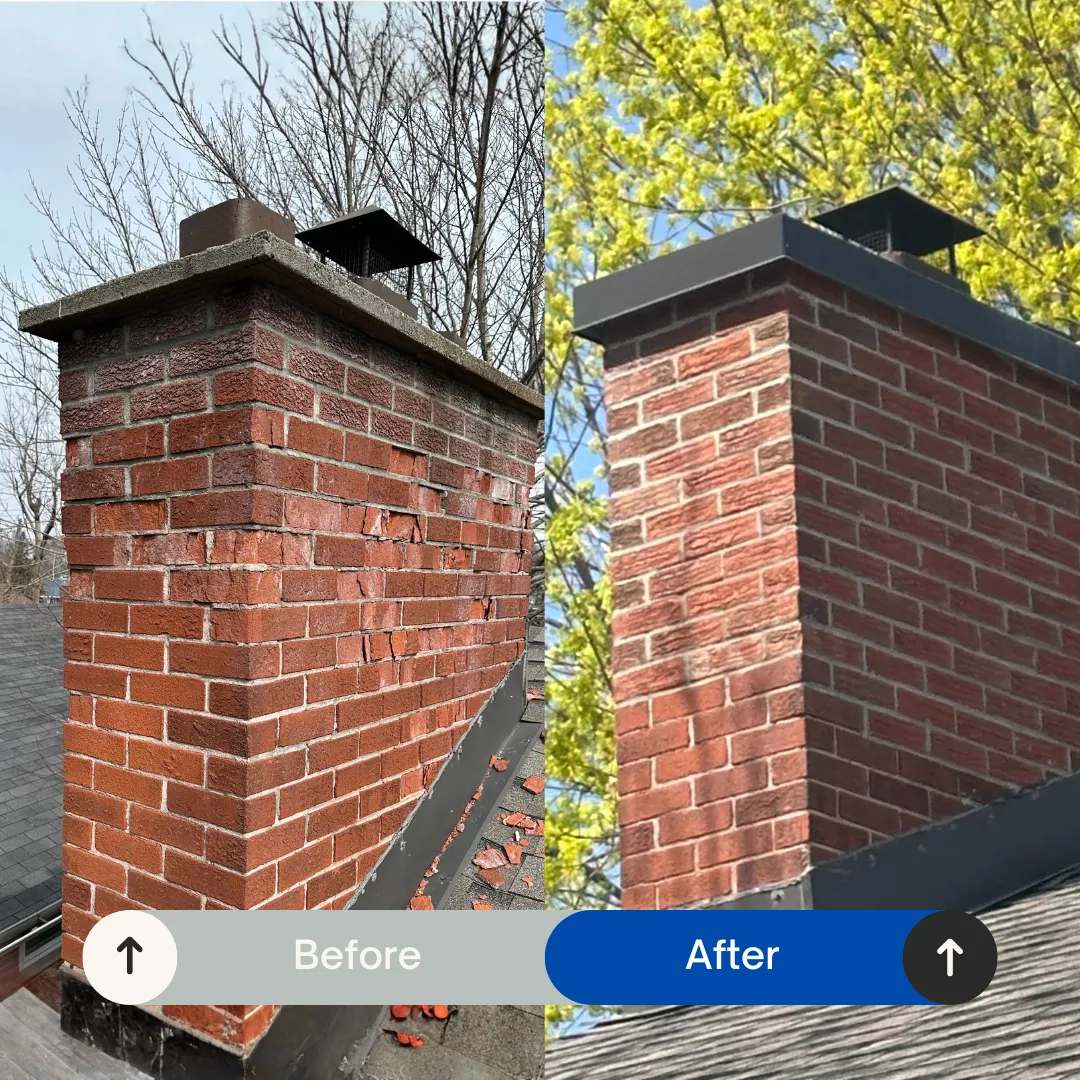
How I Assess Chimney Damage Before Recommending Repair or Rebuilding
A chimney is one of the most exposed masonry structures on an Ottawa home. It faces rain, snow, wind, ice, and repeated freeze-thaw cycles throughout the year. Over time, moisture can enter damaged bricks or mortar joints and cause deterioration that spreads from a small defect to a larger masonry problem.
When I assess chimney damage, I do not recommend rebuilding simply because I see a crack. I first examine the condition of the entire chimney, identify the source and extent of the damage, and determine whether repair, repointing, partial rebuilding, or a larger restoration is appropriate.
I Begin With the Overall Condition of the Chimney
The first step is to examine the chimney as a complete masonry structure. A visible defect may be connected to deterioration in another area, so I look at the full chimney rather than focusing on one damaged brick.
I inspect:
The brick surfaces
Mortar joints
Corners and edges
The top section of the chimney
Areas around the roofline
Flashing and transitions
Signs of leaning or movement
Previous repairs
Moisture staining
I also consider the chimney’s age, construction style, height, and exposure. A chimney located in an open area may experience more wind and moisture than one protected by surrounding structures.
Understanding the overall condition helps me determine whether the damage is isolated or part of a broader pattern.
I Look for Cracked or Broken Bricks
Cracked bricks are one of the most common signs that chimney masonry needs attention. I examine the size, depth, location, and pattern of the cracking.
I look for:
Hairline cracks
Bricks split through the face
Broken corners
Multiple cracked bricks
Loose sections
Cracks near the top of the chimney
Damaged bricks around corners
Bricks that have shifted from their original position
A single damaged brick may be replaceable without affecting the rest of the chimney. However, multiple cracked bricks may indicate moisture penetration, freeze-thaw deterioration, movement, or a larger loss of masonry strength.
I also look for bricks that appear intact but are beginning to deteriorate at the surface. These may be flaking, peeling, or losing their outer face.
I Check for Spalling and Surface Deterioration
Spalling occurs when the outer face of a brick begins to break away. It is often associated with moisture entering the brick and freezing during cold weather.
I look for:
Flaking brick surfaces
Crumbling faces
Pieces of brick on the roof
Powdery or soft areas
Missing sections
Bricks that appear swollen or split
Repeated surface deterioration
Spalling can progress gradually. A brick may begin with minor surface damage before becoming increasingly porous and vulnerable to water entry.
If several bricks are spalling, I investigate whether the chimney has a broader moisture problem. Replacing damaged bricks may be required, but the surrounding mortar, chimney cap, flashing, and drainage details also need to be considered.
I Examine the Mortar Joints
Mortar joints are essential to the stability and weather resistance of a chimney. When they deteriorate, water can enter the masonry more easily.
I look for:
Cracked mortar joints
Missing mortar
Recessed joints
Crumbling or powdery mortar
Open vertical joints
Joints separating from bricks
Older repointing that is failing
If the bricks remain sound but the mortar is deteriorating, chimney repointing may be suitable. This involves removing damaged mortar and replacing it with new material that is compatible with the existing masonry.
The mortar must be selected carefully. A mortar that is too hard for the existing brick can place stress on the brick and contribute to further damage. The age and condition of the chimney influence how the repair should be completed.
I Check the Top of the Chimney
The top of a chimney is particularly exposed to weather. It is often one of the first areas where damage becomes visible.
I inspect:
The uppermost rows of brick
The chimney crown or top surface
Cracked mortar
Loose bricks
Missing sections
Water staining
Signs of movement
Damage around the flue area
A damaged top section can allow water to enter the chimney from above. Once moisture reaches the masonry, freezing temperatures can accelerate cracking and deterioration.
If the damage is limited to the top portion, a partial rebuild may be appropriate. If the upper masonry has shifted or become unstable, rebuilding may be safer than completing a surface repair.
I Look for Leaning or Movement
A chimney should remain stable and aligned with the structure. I look for signs that the chimney is leaning, bulging, or shifting.
These signs may include:
A visible lean
Uneven vertical lines
Bulging brickwork
Separated corners
Large cracks through several rows
Gaps between the chimney and surrounding materials
Loose masonry near the roofline
Movement can result from long-term moisture damage, structural changes, settlement, or deterioration in the masonry itself.
If the chimney has significant movement, repointing alone may not resolve the problem. The affected section may need to be taken down and rebuilt properly. The size of the rebuild depends on how far the instability extends.
I Inspect the Area Around the Roofline
The roofline is another important area because it is where the chimney meets roofing materials and flashing. Water can enter through damaged transitions and affect the masonry over time.
I look for:
Water staining
Open gaps
Damaged flashing
Deteriorated mortar near the roof
Cracks at the chimney intersection
Moisture damage on nearby brick
Signs of water entering the attic or interior
A chimney repair may not last if water continues entering around the roof transition. While the masonry condition is my primary focus, I consider the surrounding area to identify conditions that may contribute to continued deterioration.
I Check for White Staining and Moisture
White powdery staining, often called efflorescence, can indicate that moisture is moving through the masonry. It occurs when water carries salts to the brick surface and leaves them behind as it evaporates.
I look for staining:
On the chimney face
Around mortar joints
Below the chimney cap
Near the roofline
On nearby walls
Around previous repairs
Efflorescence does not always mean the chimney needs rebuilding, but it shows that moisture is present or has been present. I look for the source and determine whether the masonry has been affected beyond the surface.
I Review Previous Chimney Repairs
Many chimneys have undergone repairs over the years. Previous work can provide useful information about how the masonry has performed.
I look for:
Different brick types
Mismatched mortar
Patches that are cracking
Repointed areas that are separating
Replaced bricks with surface damage
Sections that have been rebuilt previously
Temporary repairs that are failing
An older repair may have failed because moisture continued entering the chimney, because the materials were not compatible, or because deterioration extended beyond the repaired section.
I assess the old work together with the surrounding masonry. A failed repair does not always mean the entire chimney needs to be rebuilt, but it may indicate that the original scope did not address the complete problem.
I Determine Whether the Damage Is Localized
After inspecting the chimney, I determine whether the damage is limited or widespread.
A localized repair may be appropriate when:
Only a few bricks are damaged
The chimney remains stable
Mortar deterioration is limited
There is no visible leaning
The surrounding masonry is in good condition
Moisture entry is limited or can be addressed
A larger restoration or rebuild may be needed when:
Many bricks are cracked or spalling
Mortar joints are failing across large sections
The chimney is leaning or bulging
Upper sections are loose
Water has caused widespread deterioration
Previous repairs are failing repeatedly
The masonry is no longer stable
The goal is to match the repair to the actual condition rather than automatically choosing the largest or smallest option.
When I Recommend Chimney Repointing
I may recommend repointing when the primary issue is deteriorated mortar and the bricks remain sound.
Repointing can help:
Restore damaged joints
Reduce moisture entry
Improve the appearance of the chimney
Support the existing brickwork
Extend the service life of stable masonry
The damaged mortar must be removed carefully, and the joints must be filled and finished properly. Repointing is not a suitable solution for bricks that are cracked through, severely spalled, or no longer stable.
When I Recommend Brick Replacement
I may recommend replacing individual bricks when the damage is isolated to specific areas.
Brick replacement may be appropriate when:
Bricks are cracked or broken
The outer face has deteriorated
Individual bricks are loose
The damage is caused by moisture or freezing
The surrounding masonry remains stable
Replacement bricks should be selected to work with the existing chimney in size, colour, texture, and performance.
When I Recommend a Partial or Full Rebuild
A partial rebuild may be appropriate when deterioration is concentrated in one section, such as the chimney top or an area near the roofline.
A larger rebuild may be necessary when:
The chimney has significant movement
Extensive sections are unstable
The masonry has deteriorated across multiple levels
The brickwork can no longer be reliably repaired
Water damage has weakened large portions of the structure
The decision depends on the condition found during the inspection. Rebuilding should address the unstable or deteriorated masonry while preserving sound sections whenever practical.
Final Thoughts
Before recommending chimney repair or rebuilding in Ottawa, I examine the entire masonry structure. I check the bricks, mortar joints, top section, roofline, previous repairs, moisture exposure, and signs of movement.
Some chimney problems can be addressed through repointing or individual brick replacement. Other situations require partial rebuilding or a more extensive restoration. The right choice depends on the amount of damage, the stability of the chimney, and the cause of the deterioration.
Early inspection can help identify masonry problems before they spread through additional freeze-thaw cycles. If you notice cracked bricks, missing mortar, flaking surfaces, white staining, loose masonry, or a leaning chimney, a professional assessment can help determine the appropriate next step.
