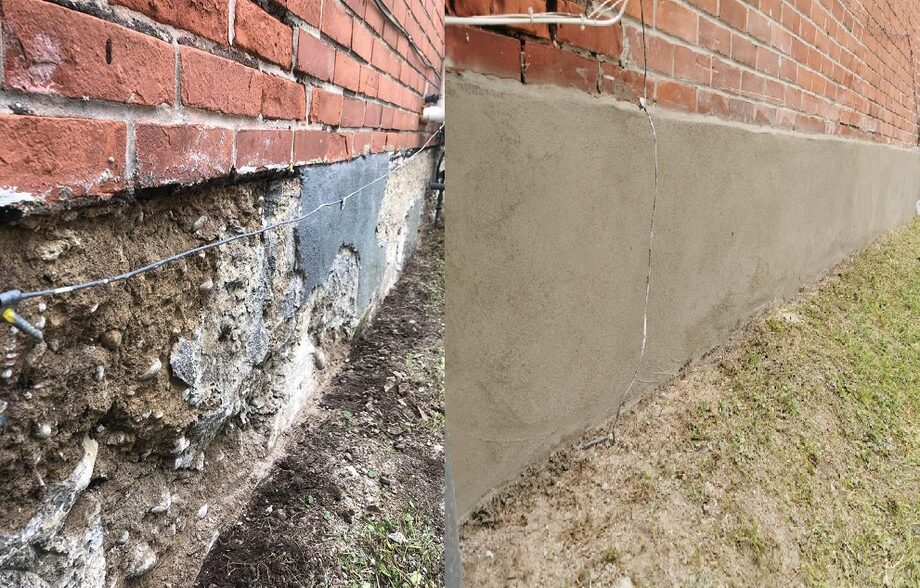
How I Repair Deteriorating Mortar Joints in Ottawa Before Water Damage Spreads
Brick masonry can remain strong and attractive for decades, but the bricks are only one part of the wall. The mortar joints surrounding those bricks are equally important. When mortar begins cracking, crumbling, receding, or falling out, I consider it an early warning that the masonry needs attention.
This is especially important in Ottawa.
Our homes experience rain, snow, ice, freezing temperatures, spring thaws, summer heat, and repeated freeze and thaw cycles. When mortar joints deteriorate, they can create vulnerable openings where moisture can enter the masonry. If those openings remain exposed, changing weather conditions can contribute to additional deterioration.
When I repair deteriorating mortar joints in Ottawa, my goal is not simply to make the joints look new again. I want to identify the damaged areas, remove deteriorated material where appropriate, restore the joints carefully, and help protect the surrounding brickwork from continued weather exposure.
For homeowners searching for masonry repair Ottawa, brick repair Ottawa, residential masonry services Ottawa, small masonry services Ottawa, or professional brick repointing in Ottawa, repairing mortar deterioration early can be an important part of protecting a masonry exterior.
Why Mortar Joints Matter So Much
When homeowners look at a brick wall, the brick naturally receives most of the attention.
But I always look closely at the mortar.
Mortar fills the spaces between individual bricks and forms an essential part of the masonry system. It helps hold the masonry together while creating finished joints between the bricks.
Over time, those joints are exposed to weather.
Rain reaches them.
Snow and ice collect against them.
Temperatures change.
Moisture freezes and thaws.
Eventually, mortar can begin showing signs of age.
When deterioration remains localized, repairs may be relatively focused. When it is ignored for years, more joints and surrounding masonry can become involved.
That is why I recommend dealing with failing mortar before extensive deterioration develops.
What Causes Mortar Joints to Deteriorate?
There is no single cause behind every deteriorated mortar joint.
The age of the masonry, weather exposure, moisture, previous repairs, construction conditions, and the location of the wall can all influence deterioration.
Some areas may remain in excellent condition while others weather more quickly.
When I inspect a property, I look for patterns rather than assuming every deteriorated joint has the same cause.
Ottawa Weather Is a Major Factor
Ottawa's climate can be demanding on exterior masonry.
A brick wall may experience heavy rain during one season and prolonged freezing conditions during another.
Spring and fall can bring repeated temperature changes around the freezing point.
Those transitions matter.
When mortar is already cracked or deteriorating, moisture can enter vulnerable areas.
Once temperatures fall below freezing, that moisture can freeze and expand.
When temperatures rise, it thaws.
The cycle can repeat many times.
Existing deterioration can gradually become worse.
This is one reason I believe preventive mortar repair is so valuable in Ottawa.
How Water Can Enter Deteriorated Mortar Joints
A healthy masonry wall is designed to deal with exterior exposure.
Problems can develop when deterioration creates additional pathways for moisture.
A small crack may not seem significant from the ground.
But rain can enter that opening.
If mortar has eroded deeply between bricks, more of the joint is exposed.
If sections are missing entirely, water has an even easier pathway.
Once moisture begins affecting vulnerable masonry, surrounding bricks and mortar may experience additional weather related deterioration.
Repairing the joints helps address these openings before they become more extensive.
Signs I Look for in Deteriorating Mortar
Mortar deterioration does not always look dramatic.
Some warning signs develop slowly.
Cracking
Cracks can appear along individual joints or across larger sections.
I look at the location, direction, width, and surrounding masonry before deciding what repair is appropriate.
Crumbling Mortar
If mortar breaks apart easily or appears powdery, it may have deteriorated significantly.
Loose material does not provide the foundation I want for a proper repair.
Recessed Joints
Mortar can gradually erode deeper into the wall.
When joints become noticeably recessed compared with surrounding areas, I consider whether repointing is needed.
Missing Sections
In more advanced deterioration, portions of mortar may be completely missing.
These openings deserve attention because they leave the masonry more exposed.
Separation From Brick Edges
Mortar can sometimes pull away from the brick, leaving narrow openings along the edges.
Even small gaps are worth inspecting.
Previous Repairs Failing
Older repairs can eventually deteriorate too.
If patched areas are cracking, separating, or falling out, I assess both the repair and the surrounding original masonry.
Why I Do Not Simply Cover Old Mortar
One of the most important principles in mortar repair is preparation.
If existing mortar is loose and deteriorated, simply spreading fresh mortar over the surface may hide the problem without creating the repair I want.
The new material needs an appropriate joint.
That often means deteriorated mortar needs to be carefully removed before repointing.
I want to work from sound surrounding material rather than unstable debris.
The preparation may not be the most visible part of the finished project, but it is one of the most important.
What Is Brick Repointing?
Repointing is the process of renewing deteriorated mortar joints in masonry.
The general process involves removing deteriorated mortar to an appropriate depth, preparing the joints, installing replacement mortar, and finishing the joints carefully.
It sounds simple when summarized in one sentence.
In practice, careful workmanship matters throughout the process.
I need to avoid unnecessary damage to surrounding bricks while removing deteriorated mortar.
The joints need appropriate preparation.
The new mortar needs to be placed correctly.
And the finished work should integrate naturally with the existing brickwork.
My Process for Repairing Mortar Joints in Ottawa
Every project is different, but I generally approach deteriorated mortar through several stages.
Step 1: I Inspect the Entire Affected Area
I start by looking beyond the single joint that first caught the homeowner's attention.
I examine surrounding joints, bricks, corners, openings, and transitions.
Sometimes deterioration is limited.
Sometimes the visible problem is only one part of a larger weathered area.
Understanding the complete condition helps me determine the correct scope.
Step 2: I Identify Sound and Failed Mortar
I do not want to disturb masonry unnecessarily.
If surrounding joints remain sound, I take that into account.
My focus is on material that actually needs repair.
Step 3: I Remove Deteriorated Mortar Where Required
Failed mortar needs to be removed carefully.
I work with attention to the surrounding bricks because damaging otherwise serviceable masonry defeats the purpose of restoration.
Step 4: I Prepare the Joints
After deteriorated material has been removed, the joints need to be prepared for replacement mortar.
This stage helps create the conditions necessary for the repair.
Step 5: I Install New Mortar
I fill the prepared joints carefully and consistently.
My goal is to restore the deteriorated sections while maintaining the overall appearance of the masonry.
Step 6: I Finish the Joints
Joint finishing matters visually and functionally.
I pay attention to how the repaired areas integrate with the existing wall rather than treating them as isolated patches.
Step 7: I Review the Surrounding Brickwork
Once repointing is complete, I review the surrounding masonry.
If individual bricks are deteriorating, those conditions may require separate attention.
When Mortar Repair Is Enough
Sometimes the mortar is the primary problem.
The bricks themselves may remain strong and serviceable.
In these situations, repointing deteriorated joints can allow me to preserve much of the existing masonry.
This is one of the reasons I value preventive maintenance.
If homeowners wait until moisture and weather have affected the bricks as well, the scope of restoration may increase.
Addressing mortar deterioration earlier can help preserve sound brickwork.
When Brick Repair Is Also Needed
Mortar repair cannot restore a brick that has already deteriorated significantly.
If bricks are cracked, badly spalled, loose, or crumbling, individual brick replacement or additional restoration may be necessary.
When I provide brick repair in Ottawa, I assess the bricks and mortar together.
Replacing a damaged brick while ignoring badly deteriorated surrounding joints would leave part of the problem unresolved.
Likewise, repointing around severely damaged bricks may not be enough.
The repair should match the actual condition.
What Is Brick Spalling?
Spalling occurs when the surface of a brick begins flaking, peeling, or breaking away.
Moisture and repeated freeze and thaw exposure can contribute to this deterioration.
At first, a brick may simply look rough.
Later, larger portions of its face may disappear.
When I see spalling alongside deteriorated mortar joints, I assess whether the affected bricks remain serviceable or need replacement.
Mortar Problems Around Windows and Doors
Windows and doors are important areas during masonry inspections.
Openings interrupt the continuity of a brick wall, and cracks can sometimes appear around these locations.
If mortar joints around a window or door begin deteriorating, I look at the pattern carefully.
I do not automatically fill every crack without considering why it appeared.
Understanding the condition is part of completing the correct repair.
Chimney Mortar Deterioration
Chimneys deserve particular attention.
A brick chimney can receive rain, snow, ice, freezing temperatures, and wind from multiple directions because it extends above the roof.
That exposure can make mortar deterioration particularly noticeable.
When homeowners search for chimney repair Ottawa, chimney repairs near me, or chimney repair cost, deteriorated mortar is often one of the conditions worth evaluating.
If the chimney bricks remain in reasonable condition while the joints have weathered, repointing may form an important part of the restoration.
Why I Recommend Early Chimney Repointing
A few deteriorated chimney joints may not seem urgent from the ground.
But they remain exposed to the weather every day.
Rain enters.
Winter arrives.
Moisture freezes.
More mortar deteriorates.
Eventually, surrounding bricks may also begin showing damage.
I prefer addressing localized chimney deterioration before a much larger portion of the structure requires restoration.
Stone Mortar Joints Need Maintenance Too
Repointing is not limited to brick.
Natural stone walls, facades, fireplaces, foundations, and other masonry features also rely on mortar joints.
Stone itself may remain strong while the mortar between individual pieces deteriorates.
When this happens, stone repointing can restore those joints while preserving sound stone.
The shape and spacing of stone joints can differ substantially from brickwork, so I approach each material according to its existing construction.
Mortar Deterioration on Older Ottawa Homes
Older Ottawa homes can contain masonry that has already survived many decades.
That masonry deserves a careful approach.
Old does not automatically mean defective.
Many original bricks and stones can remain in good condition even when mortar joints need attention.
When I work on older properties, I look at what can be preserved.
If the original masonry remains sound, repointing can be an effective way to maintain it without unnecessary replacement.
Previous Mortar Repairs Need Attention Too
Older homes may contain several generations of repairs.
One section may have been repointed years ago.
Another may contain newer mortar.
A third area may still have much older joints.
I assess these areas based on their present condition.
If a previous repair remains sound, I do not assume it needs replacement.
If it is cracking, separating, or deteriorating, I determine how it should be incorporated into the restoration.
How Foundation Parging Connects With Masonry Maintenance
Mortar joints are not the only masonry surfaces exposed to Ottawa weather.
The foundation below a brick wall may have a parged finish.
Over time, parging can crack, crumble, flake, or separate.
When I work on parging repair Ottawa projects, I use the same fundamental principle that guides mortar repair: I do not simply cover unstable material.
I inspect the existing condition and prepare deteriorated areas appropriately before applying the repair.
Residential Parging and Concrete Foundations
Homeowners searching for a residential parging contractor or concrete parging contractor may be dealing with exposed concrete foundation surfaces that have become uneven or deteriorated.
The condition of the foundation and existing finish influences the repair.
Preparation requirements, accessibility, damaged surface area, and existing deterioration can also affect parging contractor cost.
An inspection provides a much better understanding than assuming every foundation requires the same amount of work.
Concrete Repair Around Ottawa Homes
Concrete can also show cracking and surface deterioration.
When homeowners search for concrete repair Ottawa, I recommend determining exactly what has deteriorated before choosing a repair.
Surface damage, cracking, parging deterioration, and other conditions may require different approaches.
A good masonry repair begins with the correct diagnosis of the visible problem.
Why Water Management Matters After Repointing
Repairing deteriorated mortar is important, but homeowners can also help by paying attention to moisture around the property.
I recommend keeping gutters functioning properly.
Downspouts should direct water appropriately.
Repeated runoff should not continually soak the same masonry area.
Drainage around foundations should be monitored.
Snow accumulation and melting should also be considered.
Reducing unnecessary moisture exposure can support the long term performance of repaired masonry.
Why I Recommend Checking Mortar After Winter
Spring is an excellent time to inspect exterior brickwork.
Once the snow has melted, homeowners can look for changes caused by the previous winter.
I recommend checking for:
New cracks.
Loose mortar.
Missing joints.
Mortar fragments on the ground.
Spalling bricks.
Chimney deterioration.
Changes around windows and doors.
Damaged foundation parging.
If the masonry looks noticeably different from the previous season, it may be worth having it assessed.
Why Fall Is Another Important Inspection Time
Fall provides an opportunity to find vulnerable joints before winter.
If mortar is already missing or badly cracked, those areas will remain exposed through freezing conditions.
Having deterioration assessed before winter can help homeowners plan repairs before another freeze and thaw season adds to the damage.
Small Mortar Repairs Are Still Important
A homeowner does not need an entire wall of deteriorated mortar before contacting a masonry professional.
Sometimes only a small area requires work.
For people searching for small masonry services Ottawa, localized repointing can be valuable preventive maintenance.
A few failing joints are easier to address before the deterioration spreads across a larger section.
How I Decide Whether a Wall Needs Localized or Broader Repointing
The amount of repointing required depends on the condition.
If deterioration affects only a small group of joints, a targeted repair may make sense.
If mortar has become deeply recessed or deteriorated across a substantial portion of the wall, broader repointing may be appropriate.
I determine this by inspecting the actual masonry rather than choosing the scope based only on the age of the property.
Why Cosmetic Patches Can Create Future Problems
A thin surface patch may initially hide a deteriorated joint.
But if unstable mortar remains underneath, the repair may not address the full problem.
This can also lead to an inconsistent appearance as repeated patches accumulate over time.
I prefer careful preparation and proper repointing where required.
The objective is restoration rather than concealment.
Masonry Maintenance and Curb Appeal
Repointing can also significantly improve how a property looks.
Deep, irregular, or missing joints can make otherwise attractive brickwork appear neglected.
Freshly restored joints can bring definition back to the masonry and create a more consistent exterior appearance.
This is especially valuable when homeowners are already investing in landscaping, windows, doors, painting, or other exterior improvements.
Residential Masonry Services in Ottawa
Mortar repair is one part of the residential masonry services I provide.
Depending on the property, my work can include:
Brick repointing.
Brick repair and replacement.
Residential brick construction.
Chimney repair and restoration.
Stone repointing.
Natural stone restoration.
Stone walls and fireplaces.
Foundation parging.
Parging repairs and maintenance.
Exterior wall finishing.
Concrete related masonry repairs.
Masonry consulting.
Each project begins with evaluating what the property actually needs.
Masonry Consulting Before Major Restoration
Sometimes homeowners can see deterioration but are unsure how extensive the repair should be.
Should individual joints be repaired?
Does an entire section need repointing?
Are damaged bricks involved?
Does the chimney need separate attention?
Is the foundation parging also failing?
A masonry consultation can help clarify these questions.
I believe it is better to understand the condition first than to begin repairing based on assumptions.
What Can Affect Mortar Repair Cost?
The cost of repointing can vary because every property and wall is different.
Factors can include the size of the affected area, amount of deteriorated mortar, accessibility, height, condition of surrounding bricks, preparation requirements, joint configuration, and whether additional brick replacement is required.
Chimney repointing may also involve different access considerations than a ground-level wall.
This is why I prefer assessing the actual masonry before determining the project scope.
Preventive Repointing Can Help Avoid Larger Restoration Projects
This is the main reason I recommend repairing deteriorating mortar early.
If the joints are restored while surrounding bricks remain sound, the work can remain focused primarily on the mortar.
If deterioration continues for years, moisture and weather exposure may eventually affect more bricks.
That can increase the scope of restoration.
Preventive maintenance gives me an opportunity to preserve more existing material.
Masonry Repair Throughout the Ottawa Area
Although this article focuses on Ottawa, I provide masonry services throughout the surrounding region, including Nepean, Barrhaven, Greely, Orleans, Metcalfe, Gloucester, Downtown Ottawa, Kanata, and nearby communities.
Homes throughout these areas experience similar seasonal conditions.
The age, construction, exposure, and materials may differ, but maintaining mortar joints remains an important part of protecting masonry.
My Approach to Long Term Mortar Protection
I do not think of repointing as simply replacing something that looks old.
I think of it as maintaining an essential component of the masonry system.
My approach is to inspect the wall carefully, identify deteriorated joints, preserve sound masonry where practical, remove failed material appropriately, prepare the joints, install replacement mortar carefully, and review the surrounding brickwork.
That gives me a much better foundation for long term masonry protection than simply covering visible deterioration.
When Should Ottawa Homeowners Consider Mortar Repair?
I recommend arranging an assessment if you notice mortar that is:
Cracked.
Crumbling.
Powdery.
Deeply recessed.
Missing.
Separating from brick edges.
Falling onto the ground.
Deteriorating around a chimney.
Failing around windows or doors.
Noticeably worse after winter.
You do not have to wait until bricks become loose before taking action.
Why I Repair Mortar Before Water Damage Spreads
The most important reason I recommend early mortar repair is simple: open and deteriorated joints leave masonry more vulnerable to moisture and continued weather exposure.
Ottawa will continue having rain.
Winter will continue bringing snow and freezing temperatures.
Freeze and thaw cycles will continue.
A deteriorated joint that remains exposed through those conditions has an opportunity to become worse.
By repairing mortar while deterioration is still manageable, I can help preserve surrounding bricks and reduce vulnerable openings in the masonry.
For homeowners searching for masonry repair Ottawa, brick repair Ottawa, residential masonry services Ottawa, small masonry services Ottawa, chimney repair Ottawa, parging repair Ottawa, or professional brick repointing, early assessment is one of the most practical steps to take.
Protecting Ottawa Brickwork One Joint at a Time
Brick masonry is known for longevity, but long lasting masonry still needs maintenance.
Mortar joints are often where the first visible signs of aging appear.
I believe those signs should be treated as an opportunity rather than ignored.
A cracked joint can be inspected.
Deteriorated mortar can be removed.
A recessed joint can be repointed.
Damaged bricks can be identified.
A chimney can be restored before deterioration becomes widespread.
Small repairs today can help prevent much larger masonry restoration projects later.
At Lesway Masonry, I take pride in helping homeowners throughout Ottawa maintain their brickwork, mortar joints, chimneys, stonework, foundations, and other masonry features through careful assessment, professional repair, and preventive maintenance focused on long term protection.
