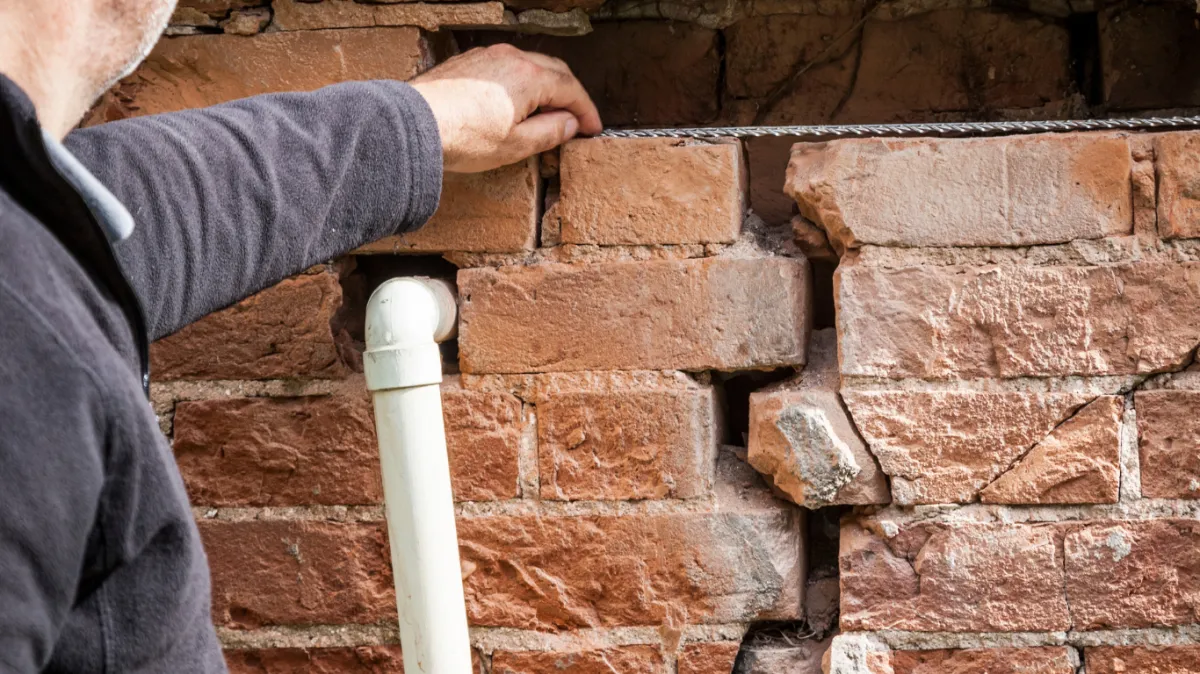
How I Repair Cracked Masonry Around Windows and Doors in Greely
Cracks around windows and doors are some of the masonry problems homeowners notice first. They are often highly visible because they appear beside openings that people see every day, and even a relatively small crack can make an otherwise well-maintained brick exterior look like it needs attention.
But when I see cracked masonry around a window or door in Greely, I do not immediately reach for mortar and cover the crack.
I want to understand what I am looking at first.
A crack around an opening can develop for different reasons. Sometimes the problem is localized mortar deterioration. Sometimes individual bricks have cracked or become damaged. In other cases, the crack pattern or movement suggests that simply filling the visible opening would not address the underlying condition.
That distinction is important.
When I repair cracked masonry around windows and doors, my goal is to determine what has deteriorated, preserve sound brickwork wherever practical, repair damaged mortar and bricks appropriately, and avoid using a cosmetic patch to hide a condition that deserves further investigation.
For homeowners searching for brick repair Ottawa, masonry repair Ottawa, masonry Ottawa, residential masonry services Ottawa, or small masonry services Ottawa, cracks around windows and doors are worth assessing before they become more extensive.
Why Cracks Often Appear Around Openings
A continuous masonry wall is interrupted wherever there is a window or door.
That makes openings important areas to examine during a masonry inspection.
Brickwork must transition around the sides, top, and bottom of the opening. Different building materials also meet in these locations.
When cracking appears, I look at the complete area rather than assuming the mortar itself is the only problem.
I want to know where the crack starts, where it ends, whether it follows mortar joints, whether bricks themselves have fractured, and whether anything else around the opening appears unusual.
Not Every Masonry Crack Means the Same Thing
This is one of the most important things I explain to homeowners.
A small crack in one mortar joint is different from a crack travelling through several bricks.
A deteriorated joint is different from visible movement.
A single damaged brick is different from a repeating stair-step pattern through multiple courses.
Because the appearance and pattern can provide useful information, I prefer inspecting the masonry before deciding how it should be repaired.
Why I Do Not Simply Fill Every Crack
Filling a crack can make it disappear visually.
That does not necessarily mean the problem has been resolved.
If the surrounding mortar has deteriorated, repointing may be appropriate.
If an individual brick has failed, brick replacement may be necessary.
If there are indications of continuing movement or a potentially significant underlying issue, covering the crack with mortar may only hide an important warning sign.
I believe masonry repair should address the condition rather than just conceal it.
What I Look for During My Inspection
When I inspect cracked masonry around a Greely window or door, I look at the opening and the surrounding wall together.
I pay attention to the crack pattern, damaged mortar, fractured or spalling bricks, loose masonry, previous repairs, moisture staining, and visible changes in the surrounding wall.
I also look at whether the crack appears limited to one area or continues farther across the masonry.
That information helps determine the appropriate next step.
Cracked Mortar Joints
Sometimes the bricks remain sound while mortar joints have cracked.
In this situation, I assess the condition of the mortar surrounding the crack.
If joints are deteriorated, recessed, loose, or missing, repointing may form part of the repair.
I do not simply place a thin layer of fresh mortar over loose material.
Where necessary, deteriorated mortar needs to be removed and the joint prepared before replacement mortar is installed.
What Brick Repointing Does
Brick repointing renews deteriorated mortar joints while preserving bricks that remain serviceable.
The process generally involves removing failed mortar from affected joints, preparing those joints, installing replacement mortar, and finishing the repair appropriately.
For aging masonry, this can be an effective way to restore deteriorated joints without unnecessarily replacing sound bricks.
Around windows and doors, careful work is particularly important because the repair often needs to integrate with several surrounding brick courses.
When Individual Bricks Are Cracked
Sometimes the crack does not stay inside the mortar joint.
It travels directly through a brick.
When this happens, I evaluate the condition of the damaged unit.
A minor surface mark and a badly fractured brick are not the same condition.
If a brick has deteriorated enough that replacement is appropriate, I can remove the damaged unit carefully and integrate a replacement into the surrounding masonry.
The objective is to repair what has failed while disturbing as little sound masonry as practical.
Why I Pay Attention to Spalling
Cracks are not the only brick problem that can develop near openings.
Brick faces can also begin flaking or breaking away.
This deterioration is commonly called spalling.
If I find spalling around a window or door, I look at the condition of the affected brick and the surrounding joints.
A badly deteriorated brick may need replacement, while nearby mortar may require repointing.
Treating both materials together can provide a more complete restoration.
Cracks Above Windows and Doors
When cracking appears above an opening, I pay careful attention to the pattern.
I do not automatically diagnose the cause based only on what can be seen from the ground.
The masonry around an opening works together with other building components, and different conditions can produce similar-looking cracks.
If the visible condition suggests that something beyond routine mortar deterioration may be involved, I recommend appropriate further assessment rather than hiding the evidence beneath a surface repair.
Cracks Beside Openings
Vertical or stair-step cracking can sometimes appear beside windows and doors.
Again, the pattern matters.
If the issue is localized deteriorated mortar, masonry repair may be relatively straightforward.
If several courses are affected or there are signs of continuing movement, I want to understand that condition before completing a cosmetic repair.
The repair should follow the diagnosis, not the other way around.
Masonry Below Windows
I also inspect the masonry underneath windows.
This area can experience moisture exposure, and deteriorated joints may develop over time.
If mortar has become recessed or bricks have started deteriorating, I evaluate whether localized repointing or brick replacement is required.
I also pay attention to the surrounding condition rather than assuming every moisture-related concern is caused by the masonry itself.
Windows, exterior transitions, and other building components can have separate maintenance requirements.
Door Openings Deserve the Same Care
Exterior doors create large interruptions in masonry walls.
Brickwork beside and above those openings should be inspected if cracking appears.
A small crack near a door may be limited to mortar.
Another crack may continue through multiple joints.
Individual bricks may also be damaged.
I look at the complete pattern before recommending a repair.
Previous Repairs Can Hide Useful Information
Older homes sometimes have cracks that have already been repaired once or several times.
A patch may cover the original joint.
Fresh mortar may have been placed over older material.
Individual bricks may have been replaced.
When I see these conditions, I look carefully at how the previous repair is performing.
If the same crack has reopened, simply filling it again may not be the best approach.
A recurring crack deserves closer evaluation.
Why Greely's Weather Matters
Exterior masonry in Greely experiences significant seasonal changes.
Rain and moisture affect masonry during warmer months.
Winter brings snow, ice, and freezing temperatures.
Spring introduces melting snow and repeated temperature changes.
When masonry already contains cracks or open joints, these conditions can make vulnerable areas more susceptible to continued deterioration.
This is why I prefer addressing damaged brick and mortar before multiple additional seasons have an opportunity to affect the same area.
Moisture Can Enter Deteriorated Joints
An open mortar joint can create an additional pathway for moisture.
Rain can reach deeper into the deteriorated area.
Melting snow can add moisture.
Then temperatures can fall below freezing.
Repeated exposure can contribute to further deterioration of already vulnerable masonry.
Repointing does not make a brick wall completely waterproof, nor should it be described that way.
It restores deteriorated mortar joints and helps reduce openings created by failed mortar.
Water Problems Are Not Always Masonry Problems
This distinction is important around windows and doors.
If a homeowner notices moisture indoors near an opening, I do not automatically assume the mortar is responsible.
Water intrusion can involve several parts of the building exterior.
Masonry may be one possibility, but windows, doors, flashing, sealant systems, roofing conditions, or other components can also be involved depending on the location.
A masonry repair should not be promised as a cure for water entry unless the masonry has actually been identified as the relevant problem.
My Approach to Localized Masonry Repair
When the damage is limited and the surrounding wall remains sound, I prefer a targeted repair.
I may repoint several deteriorated joints.
I may replace an individual damaged brick.
I may restore a small group of bricks and mortar around one side of an opening.
I do not believe every localized crack should become an unnecessarily large masonry project.
The repair should be proportionate to the actual deterioration.
Why Preparation Is Essential
Whether I am repairing mortar or replacing brick, preparation matters.
Loose mortar needs to be addressed.
Deteriorated material needs to be removed where appropriate.
The repair area needs to be properly prepared.
Only then do I want to install replacement material.
A repair can look neat from the outside while still having poor preparation underneath.
I focus on both.
Preserving Existing Brickwork
One of my priorities during restoration is preserving sound existing masonry.
If a brick remains in good condition, I do not want to replace it unnecessarily.
If surrounding mortar joints remain sound, I do not automatically disturb them.
This preservation-focused approach is especially valuable on older homes where existing brick can contribute significantly to the character of the property.
Brick Matching Around Highly Visible Openings
Windows and doors naturally attract attention.
That means replacement bricks in these locations can be particularly noticeable if they look dramatically different from the surrounding wall.
When replacement is necessary, I consider the size, colour, texture, and general appearance of the existing masonry.
My goal is to integrate the repair as naturally as practical.
Mortar Appearance Matters Too
Fresh mortar can stand out just as much as a mismatched brick.
Older mortar may have a distinctive colour, texture, and joint profile.
When repointing around an opening, I consider how the finished repair relates to surrounding joints.
A restoration should respect the existing masonry rather than appearing like an unrelated patch.
When I Recommend More Investigation
There are situations where I do not believe immediate cosmetic masonry repair should be the first step.
If cracking appears to be changing noticeably, repeatedly returns after previous repairs, accompanies visible wall movement, or involves significant displacement, the underlying condition may need additional professional assessment.
My masonry work should not disguise evidence of a potentially more significant issue.
Once the cause and appropriate repair approach are understood, the masonry can be restored accordingly.
Why Early Assessment Can Save Sound Masonry
Suppose a small section of mortar beside a window begins deteriorating.
If the surrounding bricks remain sound, localized repointing may be all that is needed from a masonry perspective.
If the area remains exposed for years and additional deterioration develops, more joints or bricks may eventually become involved.
Early assessment gives me an opportunity to preserve more of what is already there.
That is why I encourage homeowners not to wait for dramatic damage.
Small Masonry Repairs Are Worth Doing
Some homeowners hesitate to call because the crack seems too small.
But small masonry work can be important preventive maintenance.
For homeowners searching for small masonry services Ottawa, a localized repair around one window or doorway can be exactly the kind of work worth addressing early.
A project does not have to involve an entire wall to matter.
Chimneys Should Be Checked at the Same Time
If I am assessing an aging brick exterior, I also recommend paying attention to the chimney.
Chimneys experience particularly high weather exposure.
Mortar joints can deteriorate.
Brick faces can spall.
Previous repairs can fail.
For homeowners searching for chimney repair Ottawa or chimney repairs near me, early inspection can help identify localized masonry deterioration before a larger restoration becomes necessary.
Foundation Parging May Show Related Exterior Wear
I also look at the exposed foundation.
Parging can crack, flake, crumble, or separate over time.
If homeowners need parging repair Ottawa, I recommend assessing the existing surface rather than simply applying fresh material over loose sections.
Parging provides a finished and protective exterior surface, but it is not a substitute for structural foundation repair, waterproofing, or drainage correction when those separate conditions exist.
Concrete Cracks Need Their Own Assessment
A crack in concrete foundation material is different from a crack in surface parging or a deteriorated brick mortar joint.
For homeowners searching for concrete repair Ottawa, correctly identifying the affected material is important.
I do not want to treat every exterior crack with the same repair method.
Different materials and conditions require different approaches.
Stonework Around Windows and Entrances
Some Greely homes combine brick with natural stone.
Stone may be used around entrances, windows, facade sections, walls, or decorative architectural features.
Stone mortar joints can deteriorate just as brick mortar joints can.
When the stone remains sound, repointing may help restore deteriorated joints while preserving the original material.
If individual stones have become loose or damaged, the repair scope may be different.
Why Spring Is a Good Time to Check for New Cracks
After winter, I recommend inspecting exterior masonry from the ground.
Look around windows.
Check doors.
Examine corners.
Look at the lower brick courses.
Inspect the chimney from a safe location.
Check foundation parging.
If a crack appears new or an existing crack has noticeably changed, it may be worth having the area assessed.
Fall Is Another Useful Inspection Time
Before freezing temperatures return, homeowners can look for open mortar joints and deteriorated brickwork.
If vulnerable masonry is already exposed, another winter may contribute to additional deterioration.
Identifying those areas in fall provides an opportunity to plan appropriate maintenance.
What Affects the Cost of Masonry Repairs Around Openings?
The cost depends on the actual condition and scope.
A few deteriorated mortar joints are different from several fractured bricks.
Accessibility matters.
The amount of preparation matters.
Brick matching can matter.
The size of the affected area matters.
Previous repairs may influence the work.
And if cracking suggests an underlying condition that requires separate assessment first, that can change the overall project plan.
I prefer inspecting the masonry before determining what repair is appropriate.
Residential Masonry Services for Greely Homes
My work can include brick repair and replacement, brick repointing, residential brick construction, chimney masonry repair and restoration, stone repointing, natural stone facades, stone walls, stone fireplaces, foundation parging, parging repairs and maintenance, exterior wall finishing, concrete-related masonry repairs, and masonry consulting.
Each project begins with determining what the existing masonry actually needs.
Masonry Consulting Can Be Valuable for Recurring Cracks
If a homeowner has repaired the same area several times and the crack continues returning, I believe it is worth reconsidering the situation.
Repeated patching may not be addressing the reason the crack keeps appearing.
A careful masonry assessment can help determine whether the issue appears limited to deteriorated masonry or whether another type of professional evaluation should come first.
That can prevent homeowners from repeatedly paying to hide the same symptom.
Serving Greely and the Greater Ottawa Area
Although this guide focuses on cracked masonry around windows and doors in Greely, I provide residential masonry services throughout Ottawa and surrounding communities, including Barrhaven, Nepean, Orleans, Gloucester, Metcalfe, Kanata, Downtown Ottawa, and nearby areas.
Homes vary in age, design, and masonry construction, but exterior brick, stone, mortar, chimneys, and foundations throughout the region face Ottawa's changing seasonal conditions.
Preventive inspection can help identify deterioration while repairs remain focused.
My Approach Is to Repair the Problem, Not Hide It
This is the principle I want homeowners to remember.
When I see a crack around a window or door, I do not assume that filling it is automatically the correct solution.
I inspect it.
I look at the pattern.
I evaluate the mortar.
I examine the bricks.
I consider previous repairs.
I look for signs of movement.
I determine what can be preserved.
Then I decide whether repointing, brick replacement, localized masonry restoration, or further assessment is appropriate.
That process helps me avoid turning masonry repair into cosmetic crack covering.
When I Recommend Calling for an Assessment
I recommend having masonry around a window or door assessed when a crack is new, getting larger, returning after previous repair, passing through bricks, accompanied by crumbling mortar, associated with loose masonry, or surrounded by visibly deteriorated bricks.
You should also pay attention when several openings develop similar cracking patterns.
These conditions do not automatically mean there is a serious structural problem.
They do mean that determining the cause is more useful than guessing.
Repairing Cracked Masonry Before Deterioration Becomes More Extensive
Cracks around windows and doors can begin as small, highly localized defects.
Sometimes the appropriate solution is repointing.
Sometimes an individual brick needs replacement.
Sometimes several bricks and joints require restoration.
And sometimes the crack pattern tells me that additional assessment should happen before masonry is repaired.
That is why I do not believe in one-size-fits-all crack repair.
For homeowners searching for brick repair Greely, brick repair Ottawa, masonry repair Ottawa, masonry Ottawa, residential masonry services Ottawa, small masonry services Ottawa, parging repair Ottawa, or professional brick repointing, careful inspection is the right place to begin.
When I repair cracked masonry around windows and doors in Greely, my goal is to preserve sound brickwork, restore deteriorated mortar, replace damaged masonry where appropriate, and make sure the repair responds to the actual condition rather than simply hiding what can be seen from the outside.
At Lesway Masonry, I take pride in helping homeowners throughout Greely and the greater Ottawa area maintain brickwork, stonework, chimneys, foundations, and other masonry features through careful assessment, targeted restoration, and preventive maintenance designed to keep small masonry concerns from becoming unnecessarily large projects.
