The Ottawa Freeze-Thaw Problems I Watch for During Masonry Inspections
Ottawa’s climate can be hard on brick, stone, mortar, chimneys, and foundation finishes. Masonry is exposed to rain, snow, ice, humidity, and repeated changes between freezing and thawing temperatures. Over time, water can enter small cracks or open joints, freeze inside the masonry, and create pressure that gradually worsens the damage.
When I inspect masonry in Ottawa, I pay close attention to freeze-thaw problems. Some damage is easy to see, while other signs may begin as small changes in the surface or mortar. Identifying these conditions early can help property owners address masonry deterioration before it becomes a larger repair.
How Freeze-Thaw Damage Develops
Freeze-thaw damage begins when moisture enters porous masonry or small openings in mortar joints. When temperatures fall below freezing, the water expands. This expansion places pressure on the surrounding brick, stone, or mortar.
As temperatures rise, the ice melts and the material dries. The same process may happen again when the next cold period arrives. Repeated cycles can gradually cause:
Cracked mortar
Loose bricks or stones
Flaking surfaces
Open joints
Bulging masonry
Water staining
Separation between materials
Deteriorating foundation finishes
The damage may develop slowly over several seasons. A wall can appear generally sound while small areas are already allowing moisture to move deeper into the masonry.
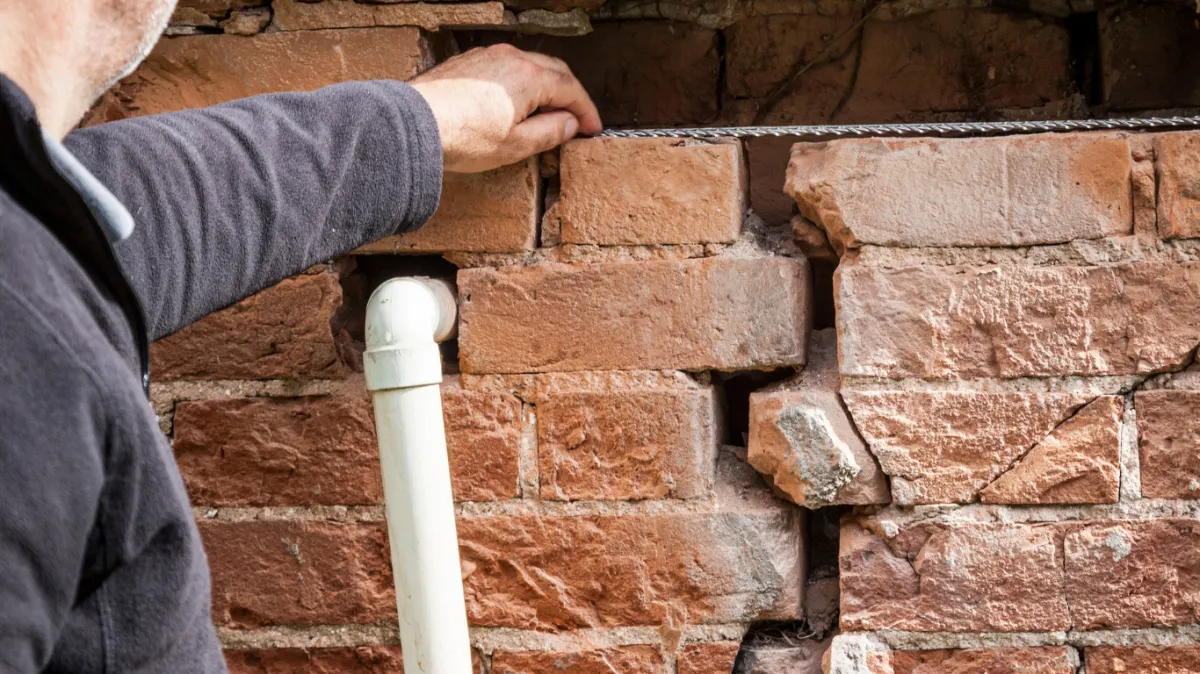
I Look for Crumbling Mortar Joints
Mortar joints are often among the first areas affected by moisture and freezing temperatures. I check whether the mortar is firm, intact, and properly connected to the surrounding brick or stone.
I look for:
Crumbling mortar
Recessed joints
Missing sections
Fine cracks
Powdery material
Open vertical joints
Mortar separating from the masonry
When mortar deteriorates, water can enter more easily. This may expose the surrounding brick or stone to additional moisture and increase the effect of future freeze-thaw cycles.
If the bricks or stones remain sound, repointing may be appropriate. This involves removing deteriorated mortar and replacing it with compatible new mortar.
I Check for Spalling Brick
Spalling occurs when the outer face of a brick flakes, peels, or breaks away. It is often connected to moisture entering the brick and freezing inside it.
I inspect for:
Small flakes on the brick surface
Missing sections of the outer face
Deep cracks
Soft or crumbling bricks
Pieces of brick below the wall
Multiple affected bricks in one area
A small amount of surface damage may be monitored, but advanced spalling can weaken the brick and allow more moisture to enter.
I also check whether nearby bricks show similar damage. If several bricks are deteriorating, the problem may involve water exposure or a larger masonry condition rather than one isolated defect.
I Look for Cracked Brick and Stone
Freeze-thaw cycles can contribute to cracks in both brick and stone. I consider the size, direction, and location of each crack.
I pay attention to:
Cracks through the face of a brick
Cracks near masonry corners
Cracked stones in walls or facades
Cracks around windows and doors
Several cracked units in one section
Cracks that continue across multiple courses
A single cracked brick may be replaceable. However, repeated cracking may point to moisture, movement, settlement, or pressure within the masonry system.
The repair depends on whether the damage is isolated or part of a broader pattern.
I Inspect Chimneys Carefully
Chimneys are especially vulnerable because they are exposed from multiple directions. They receive rain, snow, wind, and ice, while the top section is often exposed to constant weather.
During a chimney inspection, I look for:
Cracked chimney bricks
Spalling near the top
Missing mortar
Loose masonry
White staining
Damaged corners
Leaning or bulging sections
Water staining near the roofline
A small defect at the top of a chimney can allow water to enter the masonry. Repeated freezing can then cause damage to both the bricks and mortar.
Depending on the condition, the repair may involve repointing, brick replacement, partial rebuilding, or more extensive chimney restoration.
I Check Foundation Parging for Freeze-Thaw Damage
Foundation parging is also exposed to moisture, snow, ice, and freezing temperatures. When water enters cracks or weak sections, the parging may begin to separate from the foundation.
I look for:
Cracked parging
Flaking or crumbling areas
Hollow-sounding sections
Parging pulling away from the foundation
Exposed concrete
Uneven or loose surfaces
Failed previous patches
A new layer should not be applied over loose or unstable material. I first check whether the existing surface is still bonded and whether the foundation beneath it appears stable.
If water continues reaching the foundation, the parging may deteriorate again after repair. Drainage and grading conditions should therefore be considered as part of the inspection.
I Inspect Areas Around Windows and Doors
Masonry around openings can develop freeze-thaw damage when water enters through cracks, failed joints, or gaps between different materials.
I look for:
Cracks extending from window corners
Damaged bricks above openings
Open mortar joints
Water staining
Gaps around frames
Deteriorated sealant
Loose masonry near sills
These areas require close attention because water can enter behind the masonry and affect the wall assembly. Repairing the visible crack alone may not solve the problem if moisture continues entering around the opening.
I Look for Efflorescence and Water Staining
White powdery deposits on brick, stone, or foundation surfaces can indicate that moisture is moving through the masonry. This condition is commonly called efflorescence.
I inspect for staining:
Below rooflines
Around chimney joints
On foundation walls
Near windows
Around previous repairs
Along mortar joints
Efflorescence does not automatically mean that the masonry requires rebuilding, but it indicates that water has travelled through the material. I look for the possible source of the moisture and assess whether the masonry has been weakened.
I Watch for Bulging and Movement
Freeze-thaw cycles can contribute to movement when moisture causes masonry units or mortar joints to deteriorate. I look for sections that no longer remain flat and aligned.
Warning signs include:
Bulging walls
Leaning chimneys
Uneven brick courses
Separated corners
Gaps between masonry units
Loose sections
Masonry projecting outward
Movement may indicate that a repair requires more than repointing. A larger section may need to be rebuilt or stabilized if the masonry is no longer secure.
I Examine Previous Repairs
Previous repairs can reveal whether the masonry has experienced recurring moisture or freeze-thaw problems.
I look for:
Patches that are cracking
Different mortar textures
Mismatched bricks
Repairs separating at the edges
Multiple layers of parging
Replaced stones that have loosened
Earlier work that does not match the surrounding masonry
A repair may fail when moisture continues entering the area, when the surface was not prepared properly, or when incompatible materials were used.
I consider the previous repair together with the surrounding masonry to determine whether it can remain or needs to be addressed again.
I Check Drainage and Water Flow
Freeze-thaw damage is strongly connected to moisture. That is why I inspect the conditions that direct water toward masonry.
I consider:
Gutter and downspout discharge
Roof runoff
Grading around foundations
Water pooling near walls
Snow accumulation
Patio and walkway slopes
Soil touching the foundation
Drainage around stone features
If water repeatedly reaches the same section, repairs may deteriorate more quickly. Improving water management may be an important part of protecting the masonry after the repair is completed.
I Determine the Extent of the Damage
Not every freeze-thaw problem requires the same level of repair. I determine whether the damage is:
Limited to mortar joints
Confined to individual bricks or stones
Affecting a larger wall section
Connected to moisture entry
Causing movement or instability
Spread across the foundation finish
A localized problem may require repointing or individual brick replacement. Widespread deterioration may require masonry restoration or partial rebuilding.
The purpose of the inspection is to match the repair to the actual condition of the property.
How Early Repairs Can Help
Small masonry problems can become more serious when moisture continues entering through cracks and open joints. Addressing damage earlier may help reduce the area exposed to repeated freezing and thawing.
Early attention can help:
Limit moisture entry
Protect surrounding masonry
Reduce the spread of deteriorated mortar
Preserve sound bricks and stones
Prevent loose sections from worsening
Clarify the correct repair approach
An inspection does not always lead to extensive work. In many cases, it helps identify a manageable repair before the damage becomes larger.
Final Thoughts
When I inspect masonry in Ottawa, I watch for the effects of repeated freezing and thawing on brick, stone, mortar, chimneys, and foundation parging. I look for crumbling joints, spalling brick, cracked stone, water staining, loose materials, bulging sections, and drainage problems.
Freeze-thaw damage often develops gradually. A small crack or open joint can allow moisture to enter, and repeated winter exposure may cause the surrounding masonry to deteriorate.
By identifying the source and extent of the damage, I can help determine whether the property needs repointing, brick or stone replacement, parging repair, chimney restoration, or a larger masonry rebuild.
