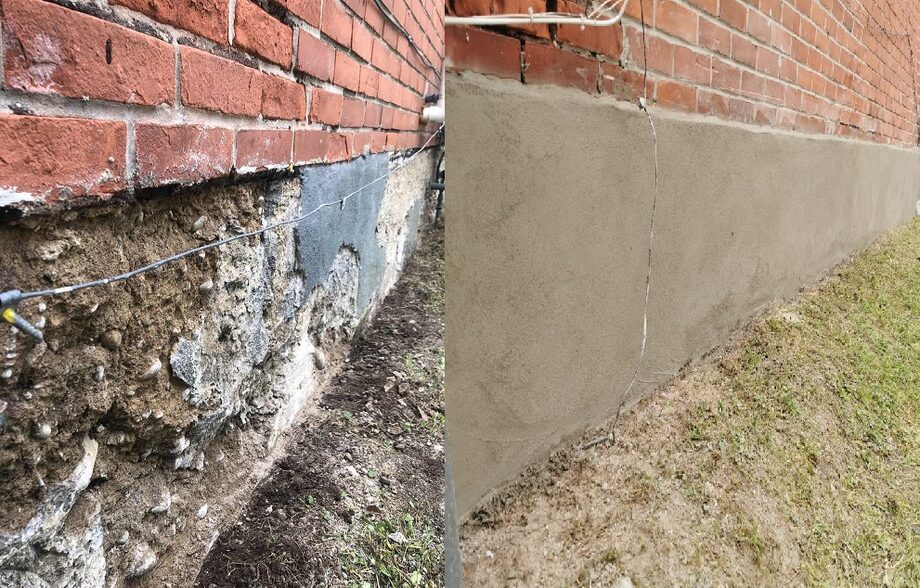
What I Check Before Repairing Cracked Foundation Parging in Ottawa
Cracked foundation parging is a common concern for Ottawa homeowners. Parging creates a finished surface over exposed concrete or masonry foundation walls, helping improve the appearance of the foundation while providing an exterior masonry finish. Over time, however, moisture, age, movement, and freeze-thaw cycles can cause the parging to crack, flake, separate, or fall away.
Before repairing cracked parging, I do not simply cover the damaged area with a new layer. I first inspect the condition of the existing surface and the foundation underneath it. This helps determine whether a localized repair is suitable or whether a larger section needs to be removed and restored.
I Examine the Type and Pattern of the Cracks
Not every crack means the same thing. The size, direction, location, and pattern of the cracking can provide useful information about the condition of the parging.
I look for:
Fine surface cracks
Long horizontal cracks
Vertical cracks
Interconnected or widespread cracking
Cracks around corners
Cracks near windows or openings
Cracks extending along the foundation wall
Areas where the crack has widened over time
Small surface cracks may be limited to the parging finish. Larger cracks may indicate movement, moisture exposure, or a loss of adhesion between the parging and the foundation.
I also check whether the cracks are isolated or spread across a large portion of the wall. A localized crack may require a focused repair, while widespread cracking may suggest that the existing parging has reached the end of its serviceable condition.
I Check Whether the Parging Is Still Bonded
One of the most important things I check is whether the existing parging remains properly attached to the foundation. Parging can appear intact from the outside while separating underneath.
I look for:
Hollow-sounding sections
Loose areas
Bulging or uneven sections
Edges beginning to lift
Sections pulling away from the foundation
Areas that move when touched
Previous patches that have separated
Hollow-sounding areas may indicate that the parging has lost its bond. Applying new material over loose or separated parging usually does not create a lasting repair because the new finish is attached to an unstable surface.
When sections are no longer properly bonded, they may need to be removed before new parging is applied. This allows the foundation surface to be prepared correctly.
I Look for Flaking and Crumbling Material
Cracked parging may also begin to flake, crumble, or break away from the foundation. This often happens when moisture enters the material and freezes during Ottawa’s colder months.
I examine whether the surface is:
Powdery
Soft
Flaking
Crumbling
Peeling away
Missing in sections
Breaking around existing patches
A small area of surface wear may be repairable, but extensive deterioration can indicate that the parging is no longer providing a stable finish.
I also check whether the exposed foundation beneath the damaged area is sound. If the concrete or masonry is affected by moisture, movement, or other damage, the underlying condition needs to be considered before the parging is restored.
I Inspect the Foundation Beneath the Parging
Parging is a finish applied over a foundation surface, so I always look at the material underneath it when damage is exposed or when sections need to be removed.
I check for:
Cracks in the concrete or masonry
Uneven foundation surfaces
Loose material
Moisture staining
Deteriorated areas
Open joints
Signs of movement
Water entering through the foundation
A crack in the parging does not always mean the foundation itself is cracked. Sometimes the finish has failed while the underlying surface remains stable. In other cases, the parging damage may be connected to movement or moisture in the foundation.
Understanding the difference helps determine the correct repair approach. The goal is not simply to create a smooth surface but to make sure the new parging is applied over a suitable base.
I Check for Moisture Problems
Moisture is one of the most common reasons foundation parging deteriorates. Before repairing the surface, I look for signs that water may be reaching the foundation repeatedly.
I examine:
Water staining
Damp areas
Moss or organic growth
Soil against the foundation
Poor grading
Downspouts discharging near the wall
Clogged or overflowing gutters
Water collecting at the base of the foundation
Cracking near ground level
If water repeatedly reaches the foundation, new parging may fail again even when the surface preparation is completed properly.
The source may be related to drainage around the property, roof runoff, grading, or water collecting near the wall. Identifying these conditions helps homeowners understand why the damage occurred and what may need attention around the repair area.
I Consider Ottawa’s Freeze-Thaw Cycles
Ottawa foundations are exposed to significant seasonal changes. Moisture can enter cracks or weak sections of parging, freeze during winter, expand, and place pressure on the surrounding material. Repeated freezing and thawing can gradually widen cracks and weaken the bond.
I pay particular attention to:
Foundation walls exposed to snow and ice
Shaded areas that remain damp
Sections near downspouts
Areas where snow accumulates
Parging close to the soil line
Older surfaces with previous repairs
Freeze-thaw damage may not appear all at once. A small crack can gradually become a larger separation as moisture continues to enter. This is why repairing deteriorating parging before larger sections fall away may help reduce the overall scope of work.
I Examine the Ground and Grading
The condition of the soil around the foundation can affect how much water reaches the parging. I look at whether the ground slopes away from the home or directs water toward the foundation.
I check for:
Depressions near the wall
Soil sitting too high against the parging
Water pooling after rain
Landscaping that directs water toward the home
Downspouts ending too close to the foundation
Areas where snow and ice collect
Even a well-applied parging finish can deteriorate if water is constantly directed toward the foundation. Ground conditions do not always need to be changed as part of the parging repair, but they are important to consider when assessing the cause of the damage.
I Review Previous Repairs and Patches
Many foundation walls have been patched or repaired more than once. Previous work can reveal how the parging has performed and whether the same area has continued to fail.
I look for:
Different textures
Colour differences
Cracked patches
Edges separating from the surrounding surface
Multiple repair layers
Loose material beneath older patches
Areas where the repair does not bond properly
A previous patch may fail because the underlying surface was not prepared adequately, because moisture remained present, or because the repair material was not suitable for the existing foundation.
I do not assume that every previous repair must be removed, but I inspect how it is connected to the surrounding surface before deciding whether it can remain.
I Determine Whether the Damage Is Localized
After examining the cracks, surface, foundation, and moisture conditions, I determine how extensive the repair needs to be.
A localized repair may be appropriate when:
The damage is limited to a small section
The surrounding parging is firmly bonded
The foundation beneath the crack is stable
There is no widespread moisture damage
The surface is generally in good condition
A larger restoration may be needed when:
Cracks cover a large area
Much of the parging is loose
Sections are falling away
The surface is heavily flaking
Previous repairs are failing across the wall
Moisture has affected multiple areas
The foundation surface requires extensive preparation
Repairing only the most visible crack may not be enough if the surrounding parging is also deteriorating. I look at the complete area to help avoid repeated repairs.
I Plan the Surface Preparation
Proper preparation is essential before new parging is applied. I consider what needs to be removed, cleaned, repaired, or prepared so the new material can bond properly.
Preparation may involve:
Removing loose or deteriorated parging
Cleaning the foundation surface
Addressing unstable material
Preparing cracked areas
Creating a suitable bonding surface
Protecting nearby areas
Checking edges and transitions
New parging should not be applied over loose material, dust, flaking surfaces, or sections that have already separated from the foundation. A smooth appearance on the day of installation does not guarantee a lasting repair if the surface underneath was not properly prepared.
I Consider the Desired Finish
Foundation parging can improve the appearance of exposed foundation walls, so I also consider the desired finish. Homeowners may want a smooth, consistent surface or a texture that works with the rest of the property.
I look at:
Existing texture
Colour and appearance
Edges around corners
Transitions to siding, brick, or stone
The visibility of the foundation
How the finish will look from the street
A repair should blend as naturally as possible with the surrounding surface. If only one section is repaired, matching the existing texture and appearance can help reduce the visual difference between the new and older material.
Why Early Parging Repairs Matter
Cracked or deteriorating parging can expose the foundation to additional weather and moisture. As more material separates, the damaged area may become larger and more difficult to restore.
Early inspection can help identify:
Whether the problem is only in the finish
Whether moisture is affecting the area
Whether the foundation beneath is stable
Whether a localized repair is suitable
Whether larger sections need restoration
This does not mean every small crack requires extensive work. It means the condition should be understood before the damage spreads or the exposed foundation experiences additional weather exposure.
Final Thoughts
Before repairing cracked foundation parging in Ottawa, I examine much more than the visible crack. I check the pattern of the damage, the bond between the parging and foundation, the condition of the underlying surface, moisture exposure, drainage, grading, previous repairs, and the impact of freeze-thaw cycles.
A lasting repair begins with proper assessment and preparation. If loose material, moisture problems, or foundation damage are left unaddressed, new parging may deteriorate again.
Whether the project requires a localized repair, larger parging restoration, or additional attention to the foundation surface, a careful inspection helps determine the appropriate next step. Cracked, flaking, hollow, or separating parging should be assessed before the damage becomes more extensive.
