
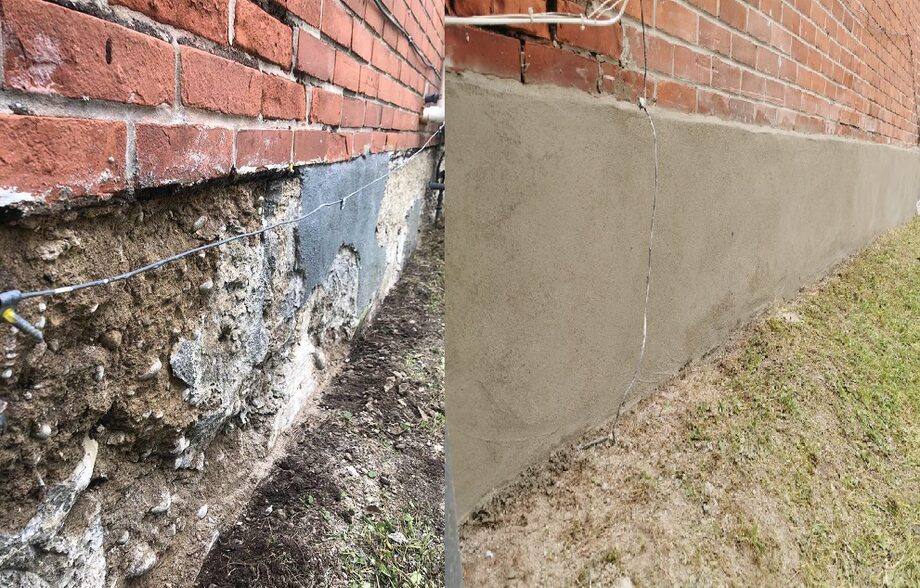
Cracked parging is one of the most common exterior masonry issues I see on homes in Nepean. At first, it often looks minor. A thin line across the surface, a small chipped section near grade level, or a patch of parging starting to separate from the wall might not seem urgent. But once that surface opens up, moisture begins to work its way in. In Ottawa’s climate, that is when small parging problems start turning into larger foundation concerns.
Parging is not the structural core of a foundation, but it plays an important protective role. It helps shield the exposed portion of the foundation wall from moisture, surface wear, temperature swings, and general weather exposure. It also gives the home a cleaner, finished appearance. When the parging begins to crack, peel, or detach, the concrete underneath becomes more vulnerable to water, freezing conditions, and long-term surface deterioration.
That is why I do not treat cracked parging like a quick cosmetic touch-up. I approach it as a repair that needs to be done properly from the surface down. In Nepean, where foundations deal with snow, ice, spring runoff, and repeated freeze thaw cycles, the repair process has to focus on durability. If the preparation is rushed or the wrong material is used, the parging may look better for a short time, but it will not last.
In this blog, I am going to walk through my step-by-step method for repairing cracked parging in Nepean, explain why each part of the process matters, and show how proper parging repair helps protect foundations for the long term.
Why Parging Cracks in Nepean Homes
Before I repair cracked parging, I always want to understand why it failed. Parging does not usually crack for no reason. In most cases, there is a combination of weather exposure, moisture, age, and movement behind it.
Nepean homes deal with some of the toughest conditions for exterior masonry. Winter brings long freezing periods, snow buildup, and frequent freeze thaw movement. Spring introduces heavy moisture and runoff. Summer heat causes expansion, and then autumn starts the cycle again. All of this puts stress on the exposed portion of the foundation.
The most common causes of cracked parging include:
Freeze thaw cycles
This is one of the biggest reasons parging fails in Nepean. Moisture enters even very small surface cracks. When temperatures drop, that moisture freezes and expands. As that process repeats, the crack grows, the bond weakens, and sections of parging start separating from the wall.
Poor bonding from an older installation
If the original parging was applied over a surface that was not cleaned or prepared properly, it may not have bonded strongly from the start. Over time, the surface begins to hollow, crack, and peel away.
Foundation movement
Small shifts in the home or surrounding soil can create stress on the parging. Even if the concrete wall remains structurally sound, slight movement may crack the surface coating.
Moisture exposure near grade
Parging near the lower portion of the wall is constantly exposed to wet soil, splashing rain, melting snow, and runoff from nearby surfaces. This repeated contact with moisture weakens the finish over time.
Age and surface wear
Parging is durable, but it is not permanent. As it ages, it naturally becomes more brittle and more vulnerable to cracking, especially if it has gone through many Ottawa winters.
Understanding these causes helps me make sure the repair does more than hide the damage. The goal is always to rebuild the surface properly so it performs better going forward.
Why Cracked Parging Should Be Repaired Early
A lot of homeowners wait too long because cracked parging often starts small. But once that outer layer is compromised, the damage usually spreads.
When cracked parging is left untreated, several things can happen:
- Moisture gets behind the surface and expands the damaged area
- More sections begin peeling or sounding hollow
- The foundation surface becomes exposed to direct weather
- Small hairline cracks turn into wide separations
- The overall appearance of the home starts to decline
- Surface deterioration becomes more expensive to repair later
Repairing cracked parging early is one of the best ways to keep the problem controlled. It allows the work to stay focused, helps preserve the foundation surface, and avoids the need for larger resurfacing later.
My Step-by-Step Method for Repairing Cracked Parging
Every parging repair starts with the same principle: do not build over weakness. A long-lasting repair depends on how well the damaged material is removed, how thoroughly the wall is prepared, and how properly the new surface is applied. Here is how I handle the process.
Step One: Inspect the Full Foundation Area
The first thing I do is inspect the full visible section of the foundation, not just the most obvious crack.
I look for:
- Hairline cracks and larger open cracks
- Hollow or detached sections
- Peeling or flaking areas
- Moisture staining
- Signs of repeated water exposure
- Surface soft spots
- Transitions near steps, corners, and grade level
- Nearby drainage patterns that may be contributing to the damage
This step matters because cracked parging is often part of a wider issue. A visible crack in one section may connect to moisture exposure along the entire wall. I want to know whether the damage is isolated or whether other areas are likely to fail soon as well.
In Nepean homes, I also pay close attention to where the grading meets the wall and where snow or runoff may sit during the year. Sometimes the crack is only one symptom of a bigger moisture pattern.
Step Two: Determine Whether the Issue Is Surface-Level or Deeper
Not every parging crack means there is a structural problem in the foundation, but I never assume it is cosmetic without checking.
At this stage, I determine whether:
- The cracking is limited to the parging layer
- The concrete underneath is sound
- There are foundation cracks that need repair before parging
- Settlement or movement may be affecting the wall
- Water pressure or persistent moisture is creating repeated stress
If the concrete wall itself is damaged, that issue has to be addressed before any new parging is applied. Parging is protective, but it is not a substitute for foundation repair. This step helps make sure the surface work is built on a stable base.
Step Three: Remove All Loose and Failing Parging
Once the condition is clear, I begin removing all loose, cracked, and detached parging.
This is one of the most important steps in the whole process.
I remove:
- Crumbling sections
- Areas that have lifted from the wall
- Hollow spots that are no longer bonded
- Weak surrounding edges that could fail later
This cannot be rushed. If damaged parging is left behind, the new layer will only be as strong as the failing material underneath it. That is how short-term repairs happen.
The goal is to get back to a firm, stable surface. In some areas, that may mean removing more than just the visible crack because adjacent sections are already weakened.
Step Four: Clean and Prepare the Foundation Surface Properly
After the loose parging is removed, the wall must be prepared properly before new material goes on.
This means cleaning away:
- Dust
- Debris
- Loose particles
- Old surface contamination
- Any material that could interfere with bonding
A clean surface is essential for adhesion. If the new parging is applied over dust or an unstable substrate, it will not bond the way it should.
Depending on the condition of the wall, I also make sure the surface is appropriately dampened before application. This helps improve the bond and prevents the wall from pulling moisture too quickly from the new mix.
In Nepean’s dry summer conditions or after exposure to sun, this preparation step can make a major difference in how well the repair cures.
Step Five: Repair Any Foundation Surface Irregularities First
Before I apply the finish coat, I make sure the underlying surface is ready.
If there are:
- Small voids
- Surface unevenness
- Minor cracks in the exposed concrete
- Damaged transitions near edges or corners
those need to be dealt with first.
This creates a more stable, uniform base for the new parging. A properly repaired foundation surface supports the finish coat better and reduces the chance of early stress points showing through.
This step is also important visually, because smooth, even preparation leads to a more consistent final result.
Step Six: Apply the Right Parging Mix for the Condition and Climate
Once the surface is properly prepared, I apply a durable parging mix suited to exterior foundation conditions.
Material choice matters. The mix needs to:
- Bond well to the foundation surface
- Handle Ottawa-area freeze thaw cycles
- Provide a clean, strong finish
- Resist early cracking
- Hold up under seasonal moisture exposure
This is not a step where I cut corners. A weak or poorly balanced mix may look smooth at first, but it will not hold up through Nepean weather.
The application itself also matters. I apply the material evenly and at the right thickness so that it forms a strong protective layer rather than a thin cosmetic patch.
Step Seven: Build Clean Edges and a Consistent Finish
Good parging repair is both functional and visual. Once the new material is applied, I finish the surface carefully so it looks clean and performs properly.
That means focusing on:
- Smooth, consistent texture
- Strong edges around the repair area
- Uniform coverage
- A finished appearance that blends with the rest of the foundation
This step is not just about curb appeal. A properly finished surface sheds water better and avoids rough weak spots that can weather faster.
For many Nepean homes, foundation parging is highly visible from the street or front entry, so appearance matters. But it should never come at the expense of durability. I make sure the finish looks clean because the underlying repair was done right.
Step Eight: Allow Proper Curing Time
One of the most overlooked parts of parging repair is curing.
Fresh parging needs time to set and gain strength properly. If it dries too quickly or is exposed to harsh conditions too early, it can crack before it ever gets the chance to perform.
That is why I pay attention to:
- Weather conditions during application
- Surface moisture balance
- Temperature during curing
- Protecting the fresh finish from premature stress
Proper curing is part of what turns a fresh application into a durable repair. In a climate like Ottawa’s, that step is essential for long-term performance.
Step Nine: Check the Surrounding Moisture Conditions
Once the surface repair is complete, I also look at what may have contributed to the damage in the first place.
This can include:
- Poor grading near the wall
- Water runoff from downspouts
- Splashback from walkways or driveways
- Areas where snow or ice sits for long periods
- Constant dampness near grade level
Parging lasts longer when the surrounding conditions support it. Even a properly applied repair can wear prematurely if water is constantly collecting against the foundation. That is why I always think beyond the patch itself and look at the full exposure around the home.
Why Proper Parging Repair Matters for Long-Term Foundation Protection
Parging does more than improve appearance. When it is in good condition, it helps reduce direct weather exposure on the visible portion of the foundation and adds a protective finish that supports long-term durability.
A properly repaired parging surface helps:
- Reduce direct moisture contact with exposed concrete
- Protect against surface wear and weathering
- Improve resistance to freeze thaw stress
- Maintain a cleaner, stronger exterior appearance
- Slow down future deterioration of the foundation surface
In Nepean, where foundations deal with real environmental stress year after year, this kind of protection makes a difference.
Common Mistakes That Lead to Short-Term Parging Repairs
I see a lot of parging repairs fail early because the work was approached like a surface patch instead of a real restoration.
The most common mistakes include:
Parging over loose material
If the old failing surface is not removed properly, the new layer will separate with it.
Poor surface preparation
Dust, debris, or a dry, unprepared wall weakens the bond from the start.
Using the wrong material
Not every mortar or surface mix is appropriate for exterior parging in Ottawa conditions.
Applying too thin a patch
Thin cosmetic coats often crack or peel much faster.
Ignoring moisture conditions around the wall
Even a good repair can wear down early if the water problem causing the damage is never considered.
Avoiding these mistakes is part of what makes the repair last.
Why Nepean Homeowners Should Not Ignore Cracked Parging
It is easy to postpone parging repair because the problem often seems cosmetic. But that visible finish is still part of how the home protects itself from weather. Once it starts cracking, moisture gets a better opportunity to work into the surface and expand the damage.
The longer cracked parging is left in place, the more likely it is that:
- Larger sections will detach
- Surface wear will spread
- The concrete underneath will become more exposed
- The repair will become more extensive later
Addressing the issue early keeps the repair simpler, cleaner, and more cost-effective.
Final Thoughts
Cracked parging is a common problem in Nepean homes, but it should never be treated like a quick patch job. A lasting repair depends on inspecting the full wall, removing all failing material, preparing the surface properly, using the right mix, and applying the finish with long-term durability in mind.
My step-by-step method is built around that principle. I do not just cover the crack. I rebuild the surface properly so the foundation is protected, the finish looks clean, and the repair can hold up through Ottawa’s changing seasons.
When parging is repaired the right way, it gives the home more than a better appearance. It restores a protective surface that helps the foundation stay stronger, cleaner, and better prepared for the years ahead.